In Thailand, property transactions are highly regulated. Any agreement made privately without the oversight of the Land Office is considered void under the law.
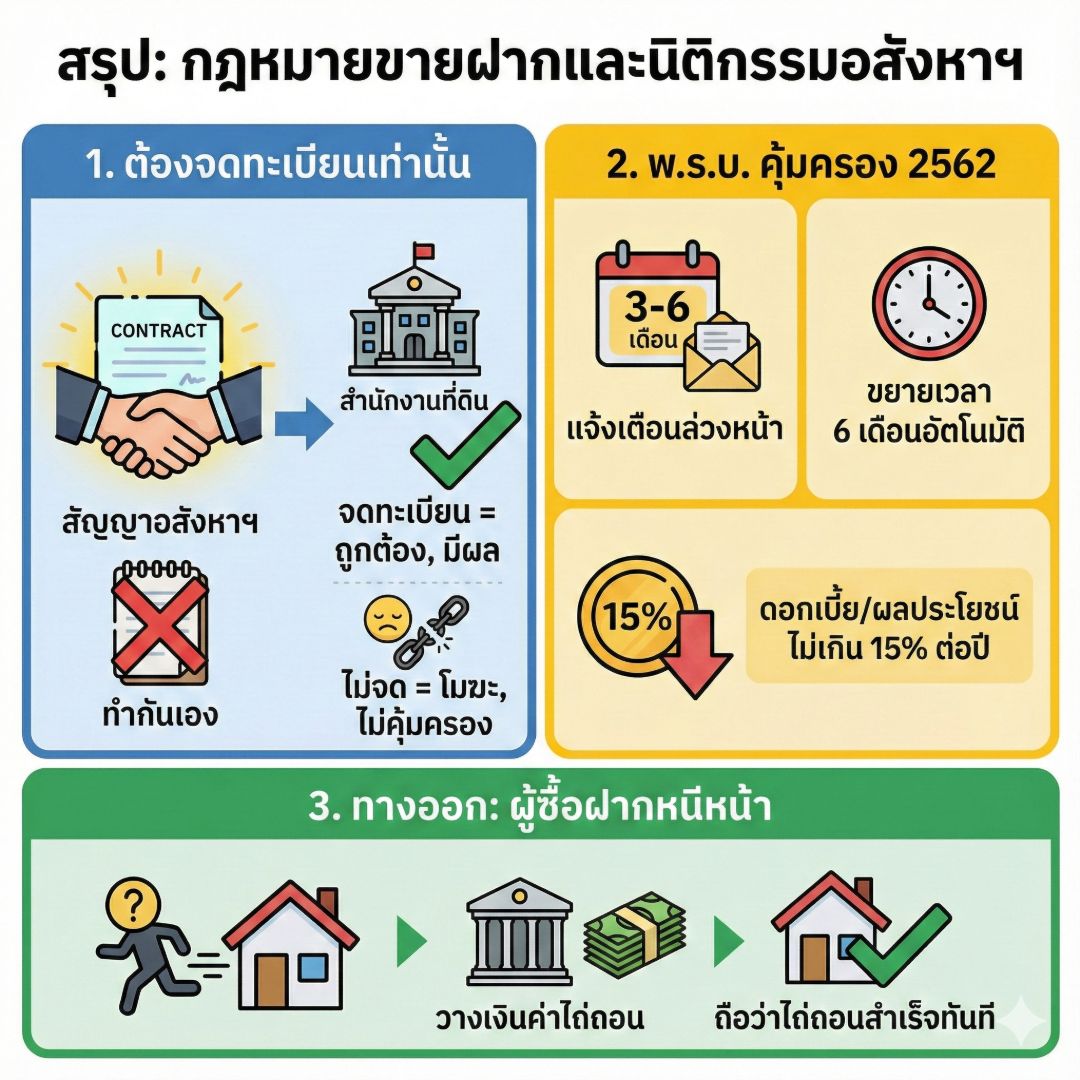
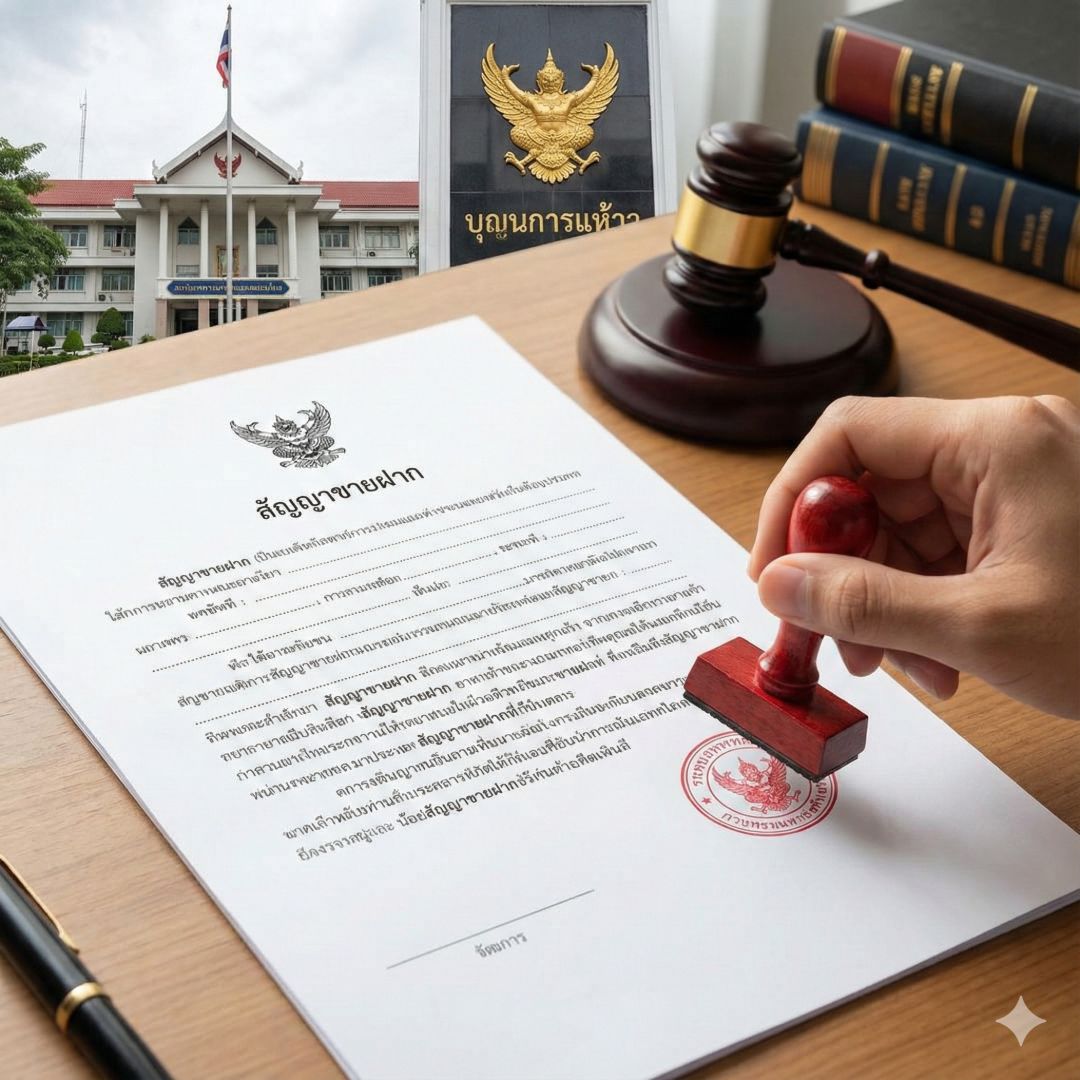
1. The Mandatory Registration Rule Pursuant to the Civil and Commercial Code, any contract concerning the sale, mortgage, or creation of rights over land and buildings must be made in writing and registered with the Land Official.
If you sign a "Sale with Right of Redemption" contract at a coffee shop or a lawyer's office but do not record it on the back of the Title Deed (Chanote) at the Land Office, the contract does not transfer ownership, and your right of redemption may not be legally enforceable against third parties.
2. The 2019 Protection Act for Sale with Right of Redemption Due to past issues with predatory lending, the Protection of Citizens in Sale with Right of Redemption for Agriculture and Residential Purposes Act was enacted to provide several layers of security:
Written Notice: The buyer is legally required to send a written notice to the seller between 3 to 6 months before the expiration date. This notice must state the redemption price and the deadline.
Failure to Notify: If the buyer fails to send this notice, the law automatically extends the redemption period by another 6 months from the original deadline.
Standardized Interest: The "profit" or "interest" charged in these transactions cannot exceed 15% per year, matching the legal limit for mortgages.
3. The Role of the Deposit Office One common risk in a Sale with Right of Redemption is the "Disappearing Buyer." If a buyer realizes the property value has skyrocketed, they might try to avoid the seller on the final day so the redemption period expires.
The Solution: The law allows the seller to take the redemption money to the Legal Execution Department's Deposit Office. Once the money is deposited there, the law considers the property "redeemed," and the ownership reverts to the seller immediately, regardless of the buyer's cooperation.